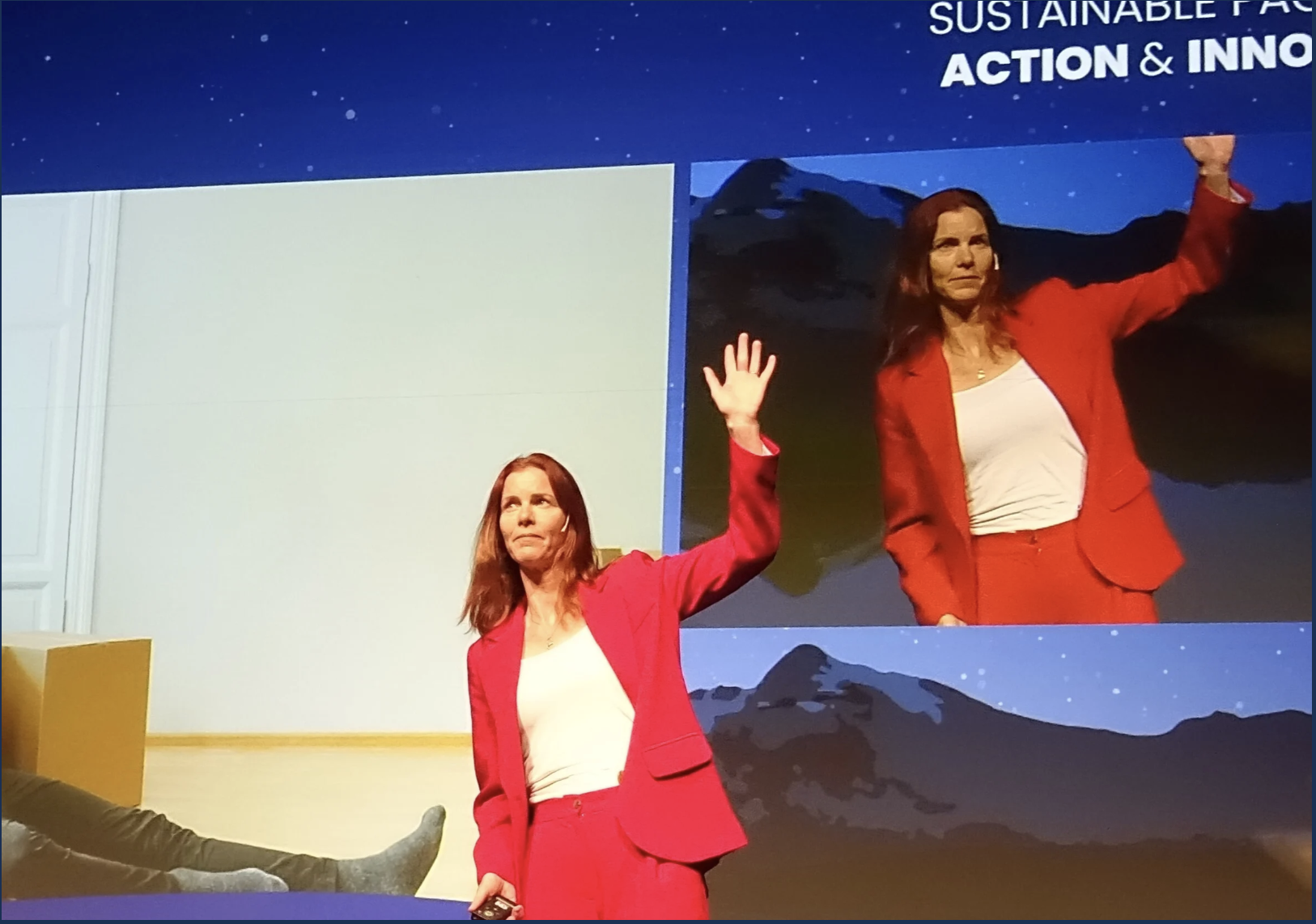
Willemijn Peeters tells how Circular Design opens new business models
At the Sustainable Packaging Summit 2025 in Utrecht, Willemijn Peeters, founder and CEO of Searious Business, delivered the opening keynote. In her presentation, she called on the packaging sector to look beyond regulations and compliance. According to Peeters, it's time to "stop ticking boxes and start building better packaging now."
Peeters began her keynote with a simple question to the audience: "Who loves packaging, and who loves packaging regulations?" This immediately set the tone. "Packaging has become a box-ticking exercise," she stated. "It's primarily about being compliant, not about building better systems."
According to Peeters, this is understandable, given the pressure of legislation and societal expectations, but unsustainable in the long run. "What if we stopped ticking boxes and started redesigning the entire system?" she asked the audience. "What if packaging is so smart and circular that regulations become virtually irrelevant?"
The Market
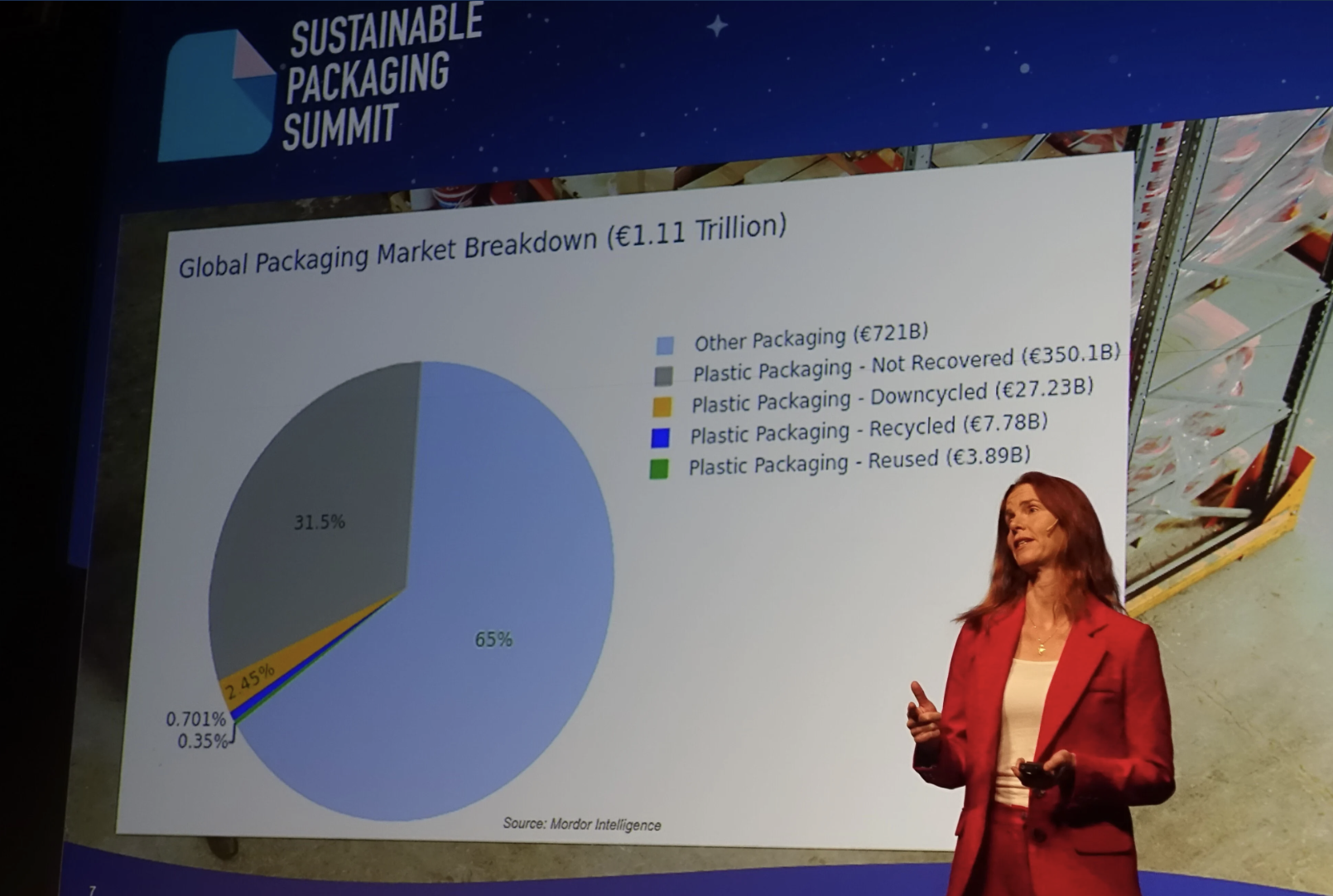
To illustrate the urgency, Peeters zoomed in on the bigger picture. The global packaging market represents a value of approximately €1.11 trillion, comparable to the gross domestic product of countries like the Netherlands or Spain. About a third of this consists of plastic packaging.
"Of all that plastic, less than 1 percent is reused and only 2 percent is recycled," she emphasized. "The rest ends up as waste or is used for low-value applications." At the same time, approximately 340 billion liters of oil are extracted annually for the production of plastic packaging. "That's enough to fill the fuel tanks of seven billion cars. That demonstrates the magnitude of this responsibility."
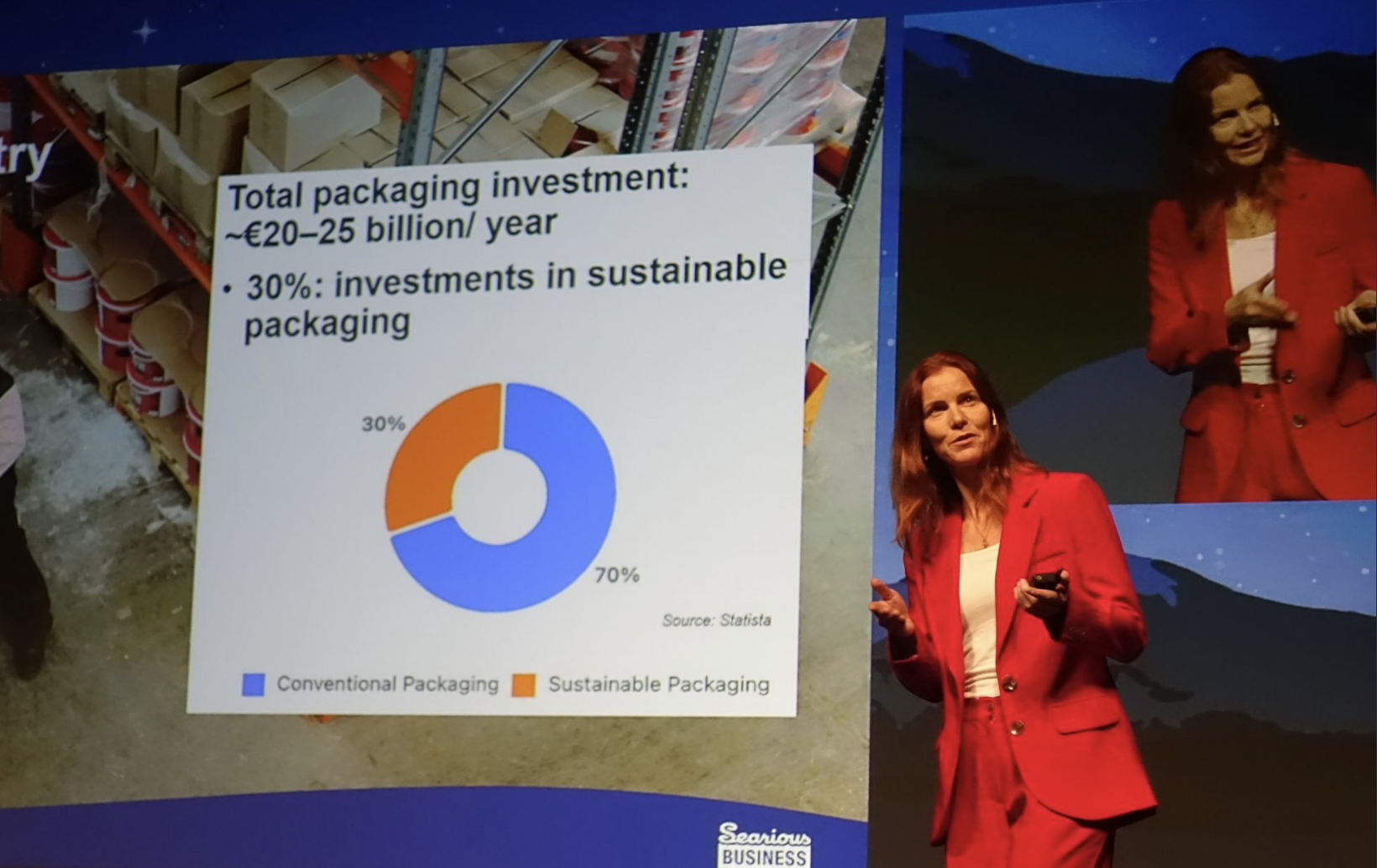
Peeters acknowledged that the sector is taking steps. Approximately 30 percent of investments in the packaging industry now go towards sustainable solutions. "That's partly thanks to the people here in the room," she said. "But there's still a clear opportunity to go beyond optimization and material choices."
Win the boardroom conversation
According to Peeters, real change doesn't start with the packaging itself, but with decision-making. "If you want to seriously implement circular design, you have to win the boardroom conversation," she stated. She illustrated this with a practical example. A packaging director first presented the costs of compliance: new levies, bans, and rising costs. "No energy, no urgency," Peeters explained. That changed when the message was reversed. "If we continue doing what we're doing now, it will cost us an additional four million euros in five years," was the message. "But if we redesign the system, we'll save €1.2 million annually, reduce CO₂ emissions by 40 percent, and create new revenue."
"At that point, the conversation was no longer about regulations, but about strategy," said Peeters. "That's the shift we need."
From business case to practice
Peeters then addressed a specific case from Searious Business. A meal delivery company was struggling with high packaging costs and increasing pressure from regulations and customers. "Every meal was packaged inefficiently."
Together, they developed a standardized reusable food container, designed for efficient cleaning, stacking, and transport. By adding smart tracking technology, they gained insight into location, usage, and maintenance. "That made the system transparent and predictable," Peeters explained.
The revenue model was also important. The company switched to "packaging as a service." "They no longer bought packaging; they paid for its use," said Peeters. "That resulted in lower costs and greater flexibility."
The result: an 80 percent reduction in packaging volume, a 25 percent increase in customer retention, and a positive return on investment. "This demonstrates that circular design not only delivers environmental benefits but can also make good business sense."
Personal Motivation
At the end of her keynote, Peeters shared a personal story: a diving experience near Lombok, in the heart of the Coral Triangle, confronted her with plastic pollution in an otherwise pristine environment. "That moment changed me," she said. "It's the reason I founded Searious Business: to transform personal urgency into scalable solutions." She concluded with a call to action to the sector. "There's no one-size-fits-all solution," she emphasized. "But if we stop simply complying with regulations and start designing with ambition, we can set new standards."
"Regulations ultimately lag behind what forward-thinking companies are already doing," Peeters concluded. "Let's not view innovation as the end goal, but as the starting point." Then we will not only build better packaging, but a better system.'